Bulan
An African-themed website that showcases 111 hand-drawn African gods, with the story, personality and history behind each one.
Live at bulan-legacy.vercel.app
Metrics
- 6-week sprint, from research to visual design.
- 111 gods, each with a gender, class, pantheon, sub-continent and story.
- 22 pantheons and 28 classes to filter by.
- 4 projects with strong galleries studied.
- 3 breakpoints designed: desktop, tablet and mobile.
Role
Product designer: research, personas, user flows, site map, design system, wireframes and visual design in Figma, documentation in Notion and handoff to the front-end developer in Zeplin. Website, April to June 2022.
Overview
Bulan is an African-themed project, built on the idea of balancing community engagement through art with value from features made for its people. The gods of Bulan set out to change the narrative about African deities, and to teach people the history and culture around them.
Problem
There is a widespread lack of awareness and understanding of African deities. The misrepresentation and limited knowledge of African history and culture, and of its diverse, intricate pantheon of divine figures in particular, keep African gods from the appreciation and recognition they deserve, and close off chances for meaningful engagement and education around the world.
Goals
- Main goal: a user-friendly website with a gallery that showcases each of the 111 hand-drawn African gods.
- Supporting goal: detailed information on every deity (gender, class, pantheon, sub-continent) and a captivating narrative about its story and cultural significance, easy to find and pleasant to read.
Process
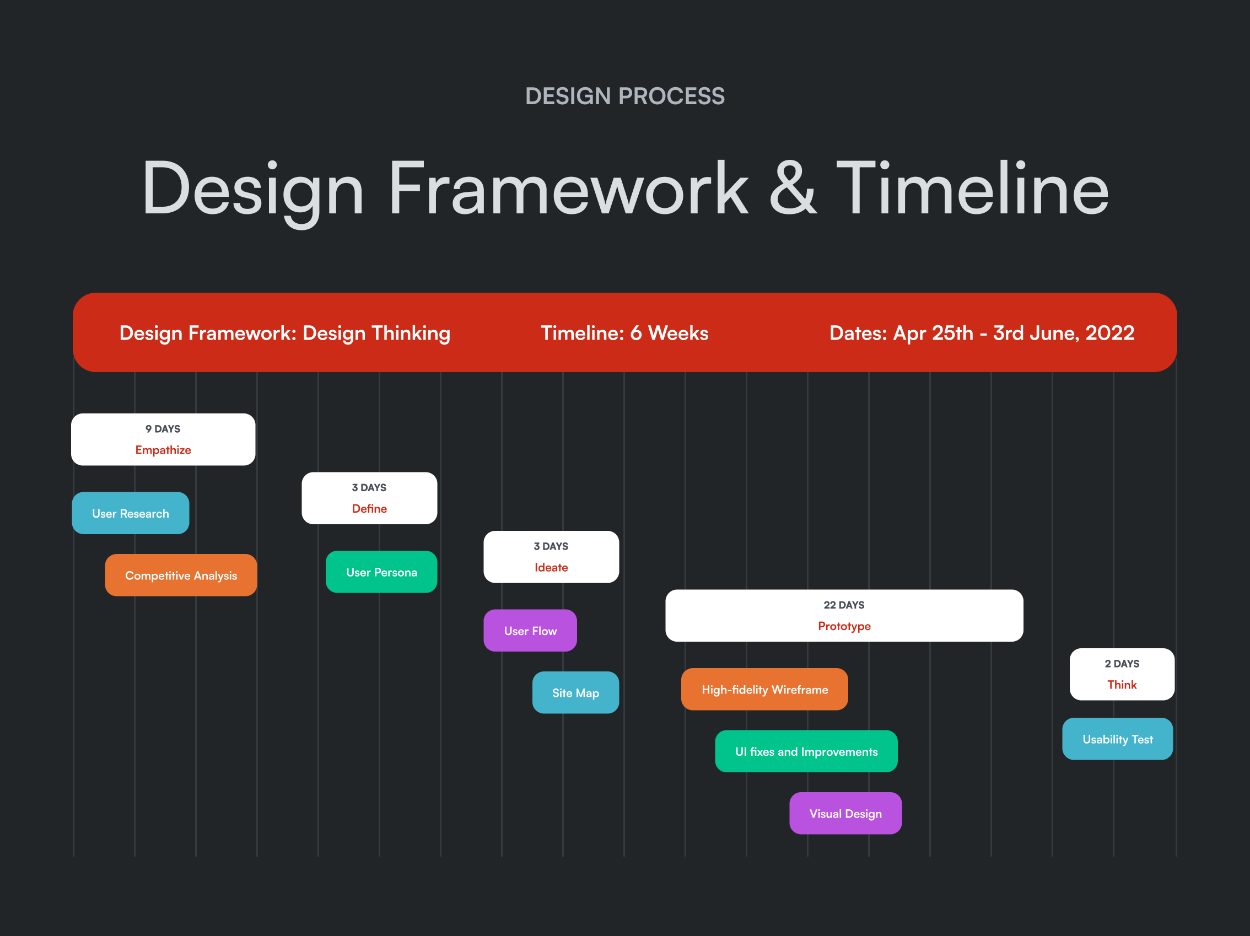
Design thinking over six weeks, from April 25 to June 3, 2022:
- Empathize, 9 days: user research and a competitive analysis.
- Define, 3 days: user personas.
- Ideate, 3 days: user flows and a site map.
- Prototype, 22 days: high-fidelity wireframes, visual design, then UI fixes and improvements.
- Test, 2 days: a usability test.
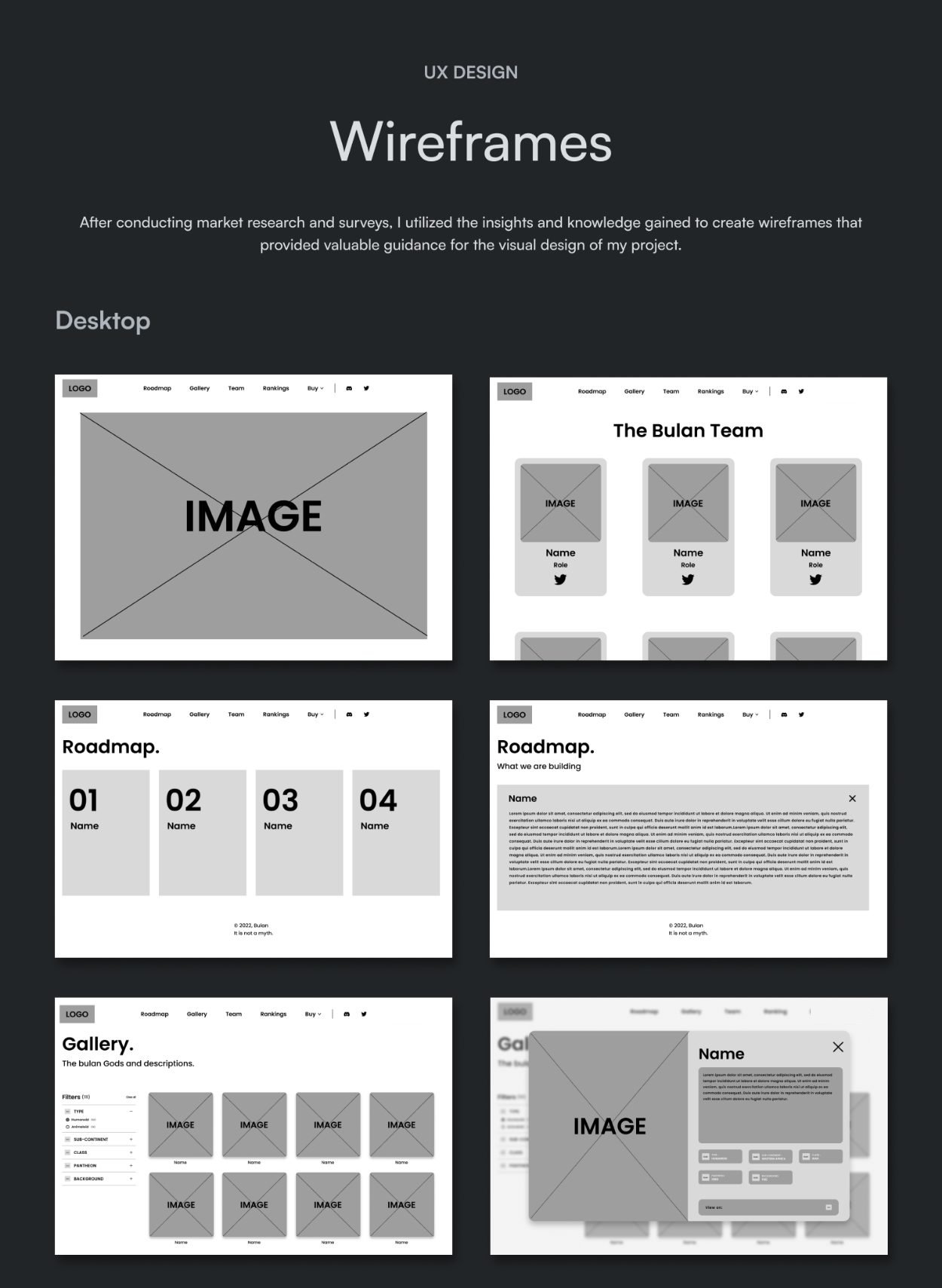
After the research, I used what I'd learned to wireframe every page before any visual design.
Research
I studied four projects known for their galleries, Azuki, Just Ape, Okay Bears and Karafuru, to see how each gives people an immersive, organised space to explore a large collection of artwork.
Then two personas, one for each reason someone comes to Bulan:
- Maya Thompson, 28, art enthusiast and educator, New York: "I wish there was a platform that simplifies research on African mythology for me." She struggles to find accurate cultural information and authentic depictions, and wants interactive, immersive material for her students.
- Alex Patel, 32, digital art collector, Denver: looks for stunning artwork that embraces diverse cultures and offers real cultural insight, not just a basic description, and wants to connect with other collectors and artists.
Information architecture
Two scenarios shaped the flows, one for each persona, and the site map keeps every page a step or two from home.
I want to read about the African god called Chukwu
- Home page
- Gallery
- Search for “Chukwu”
- Read the deity's lore
I've always liked Anubis and want to own it
- Home page
- Gallery
- Search for “Anubis”
- Buy from the Buy menu
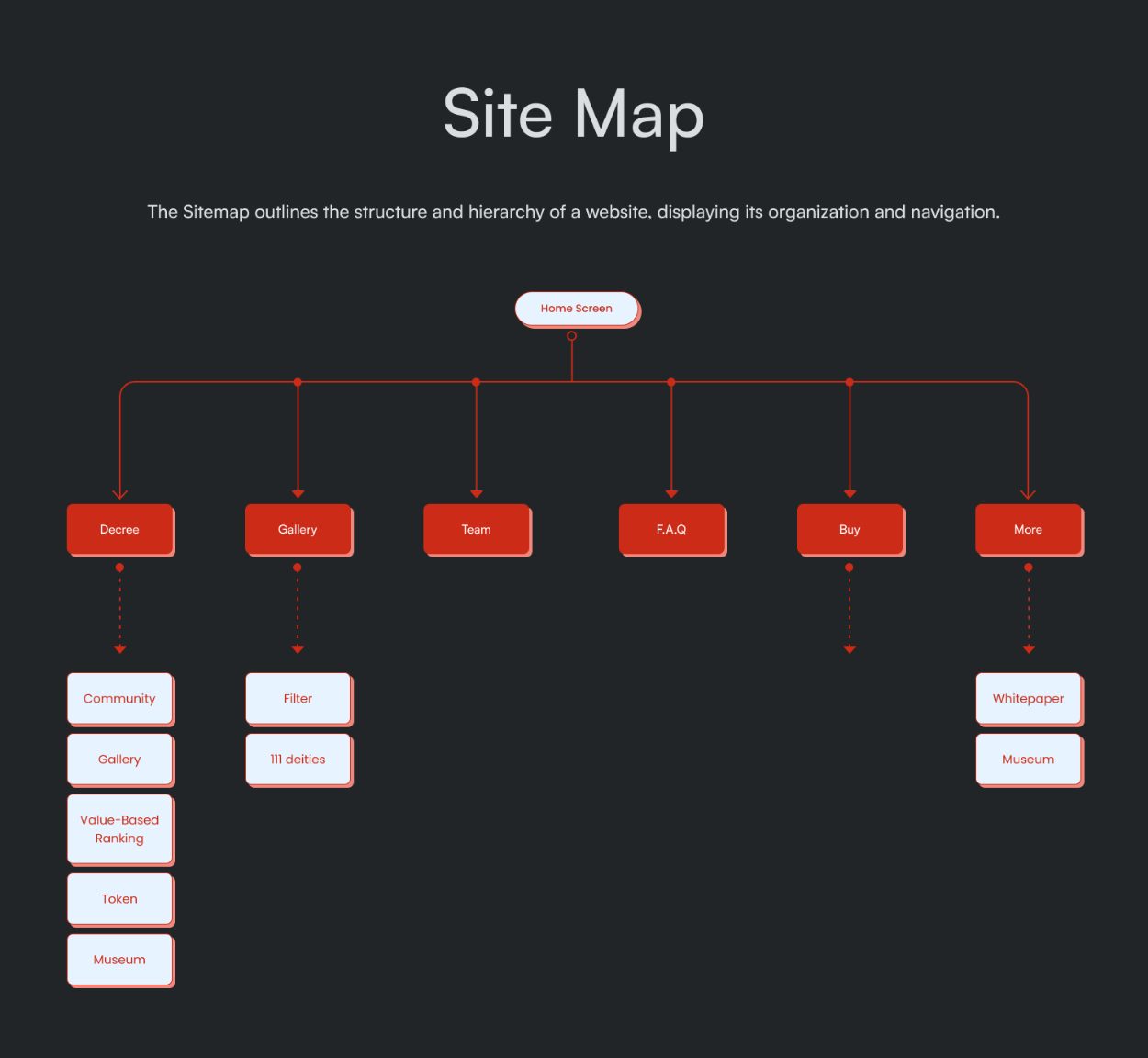
Solution
Four pages and every state between them, designed for desktop, tablet and mobile.
Home:
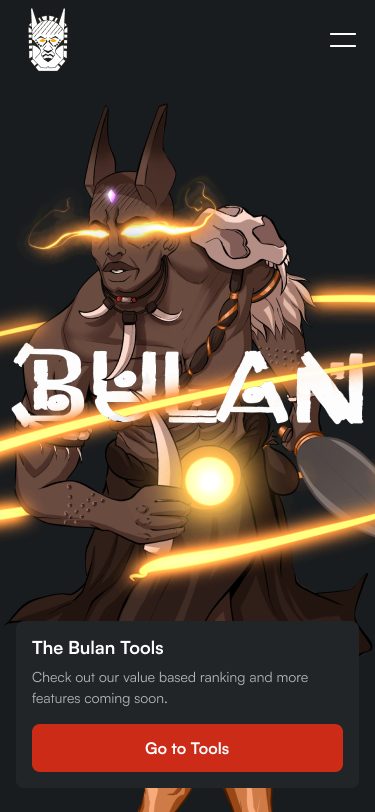
The home page is the god and the name, nothing else: the BULAN wordmark carved across one of the gods, and a single card pointing to the Bulan Tools.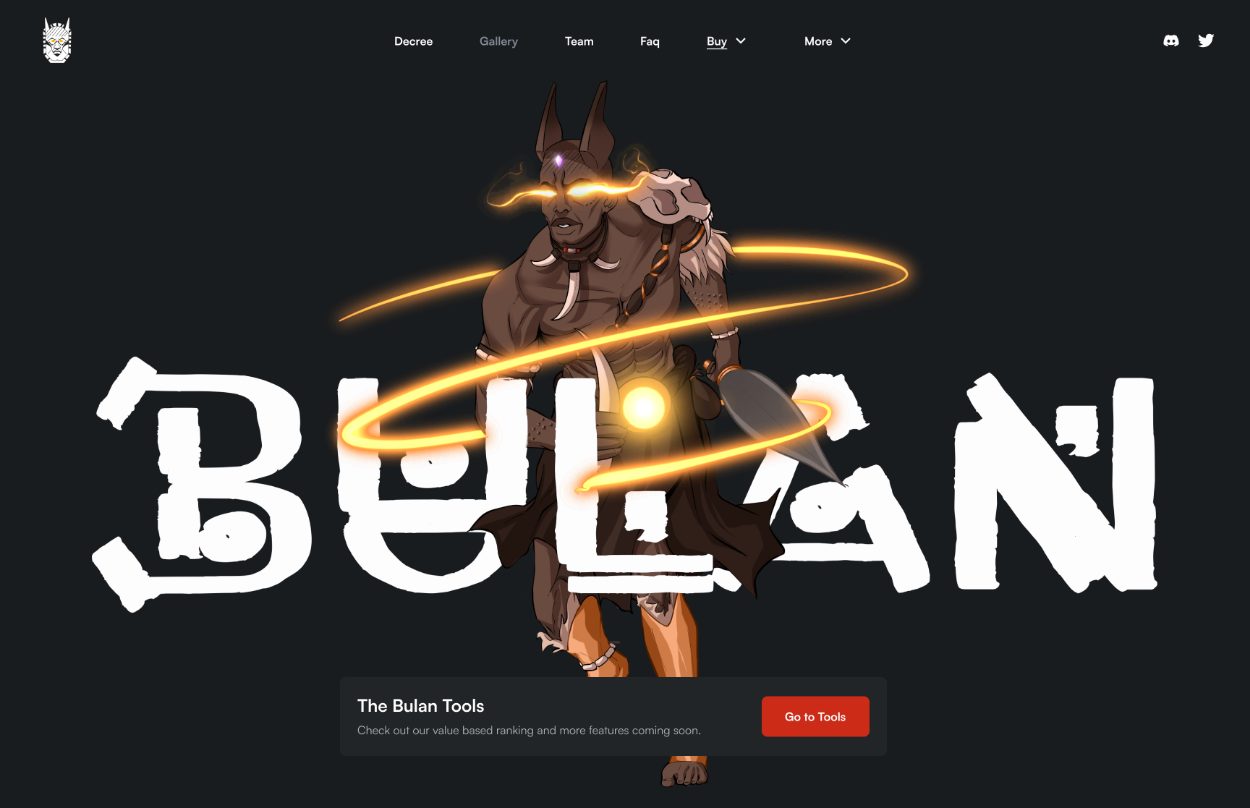
Gallery:
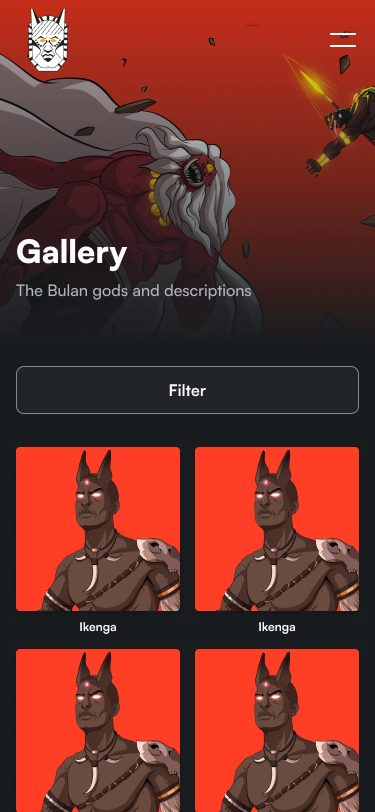
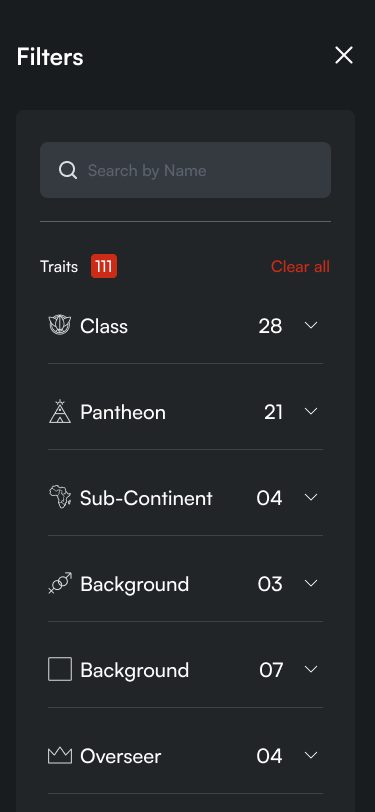
The heart of the site. All 111 gods in a grid, searchable by name and filterable by gender, class, pantheon, sub-continent, background and overseer. Opening a god brings up its card, with tabs for its lore and its traits.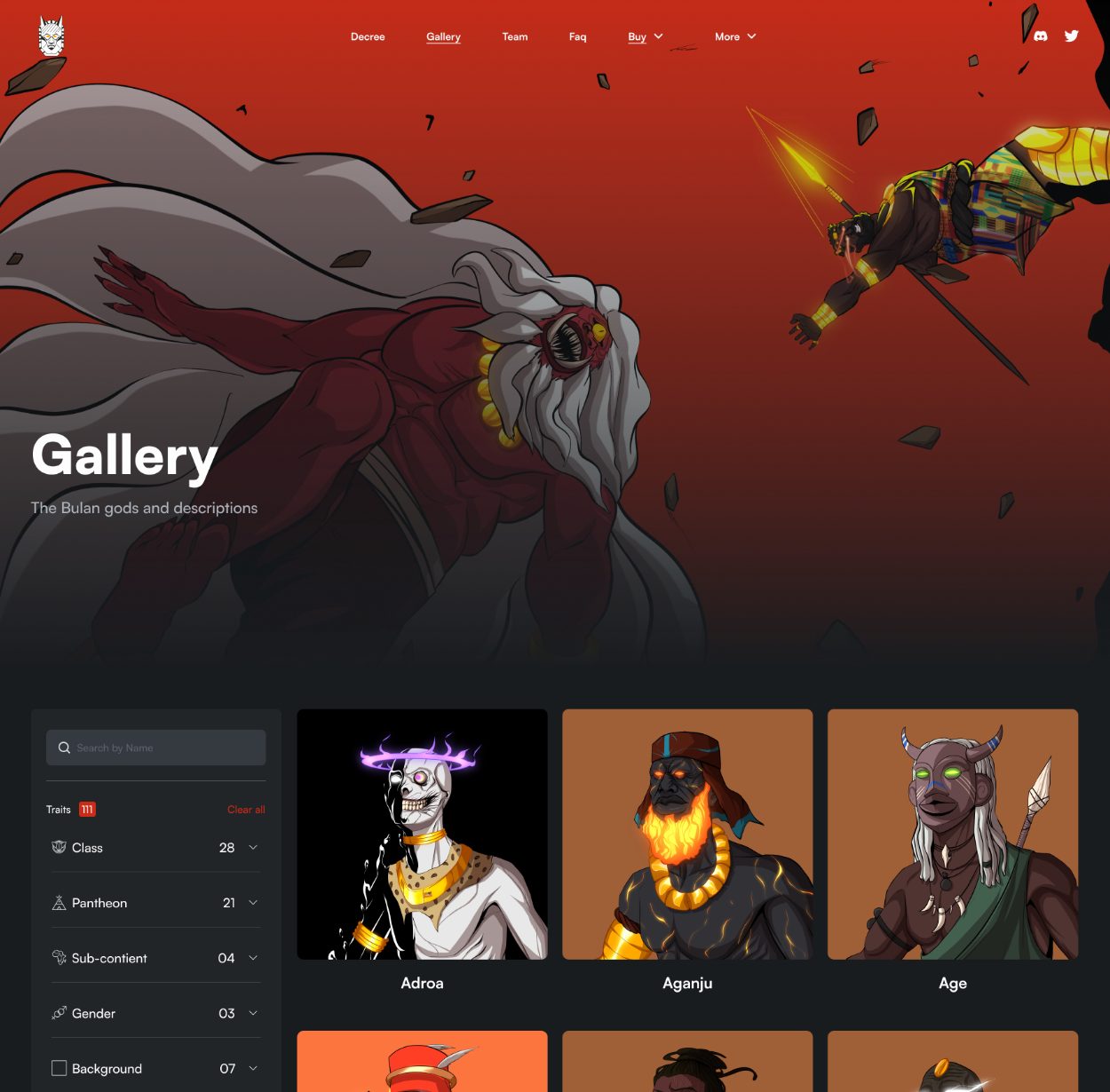
Decree:
The about page, written in the gods' own voice: "The gods of Bulan will speak now. It is not a roadmap or a mission, it is a decree." It tells the beginning, the story of Bulan's domains and the plan.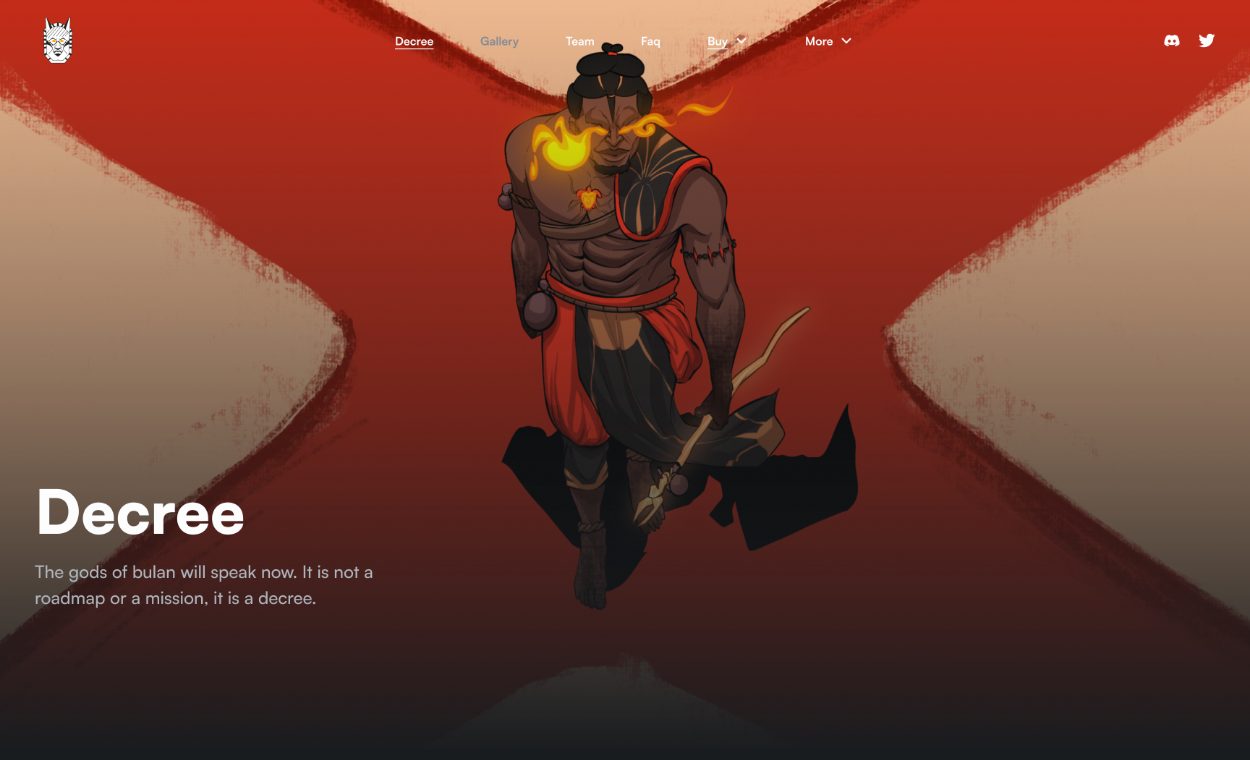
Team:
Each member of the team is drawn as one of the gods, with their role and a link to their profile.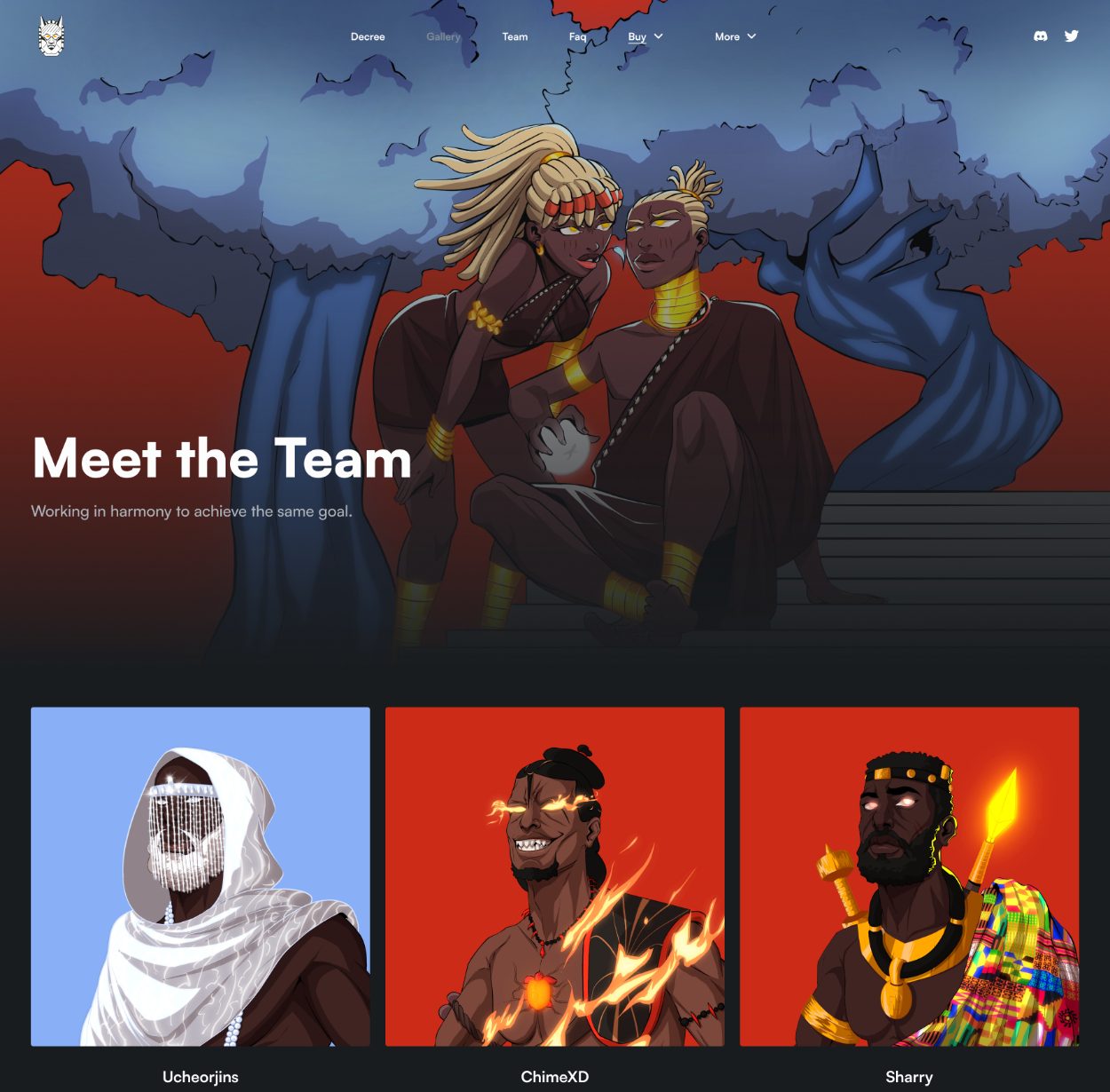
Every state:
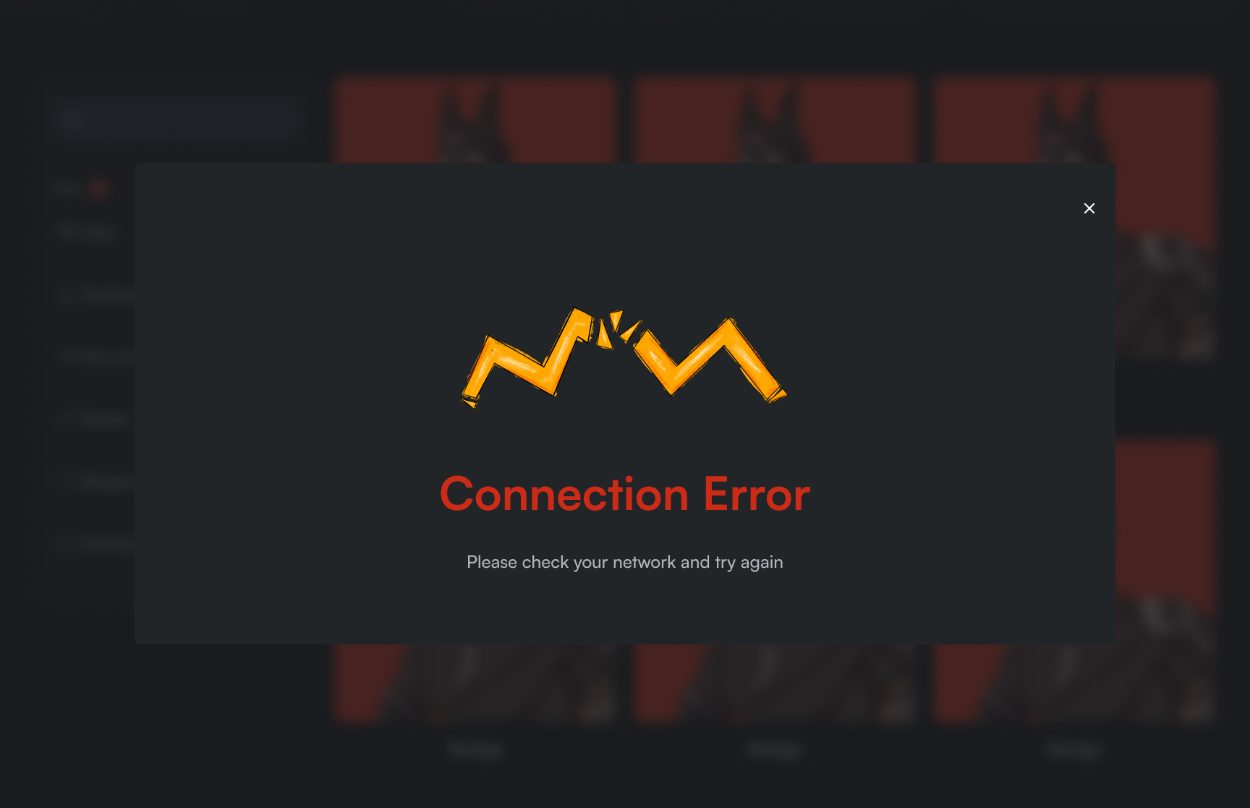
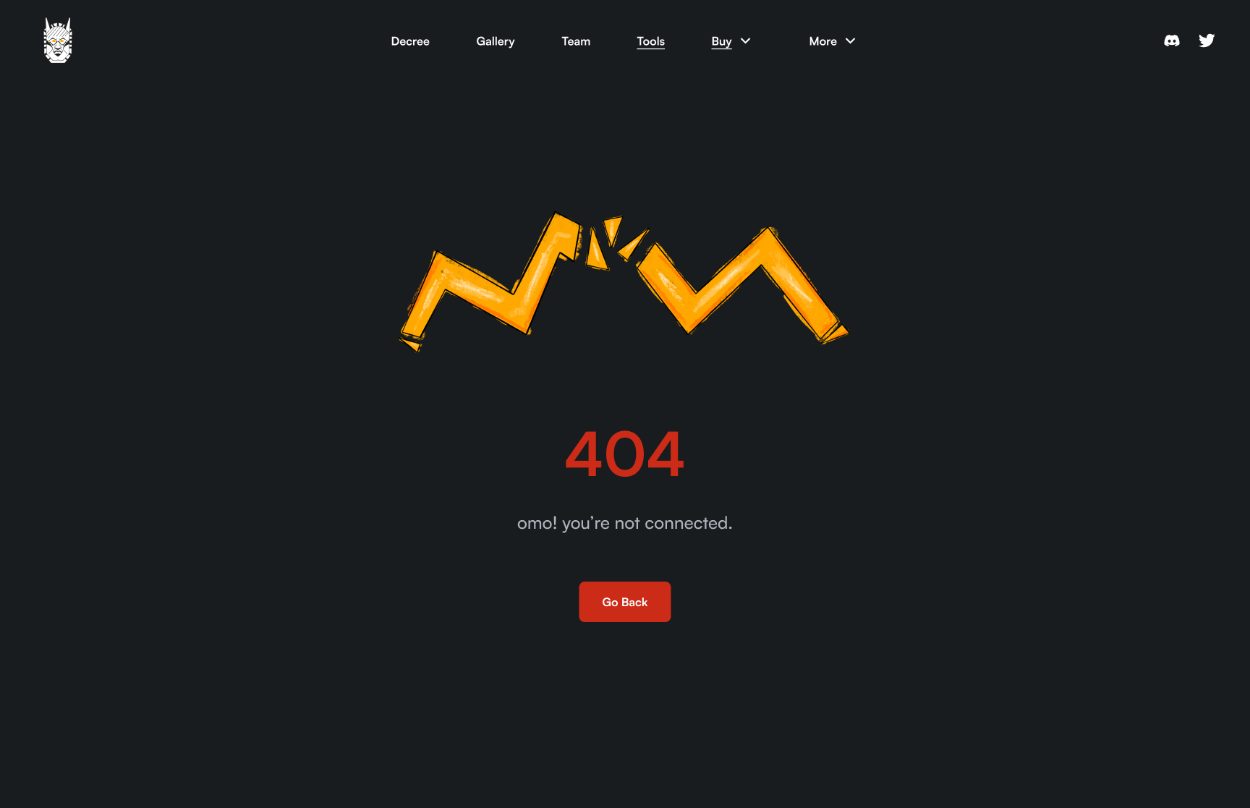
A gallery of 111 images has to load, so the design covers what people see while it does: a skeleton in the shape of the page, a clear connection error with a way to retry, and a 404 that sends people back home.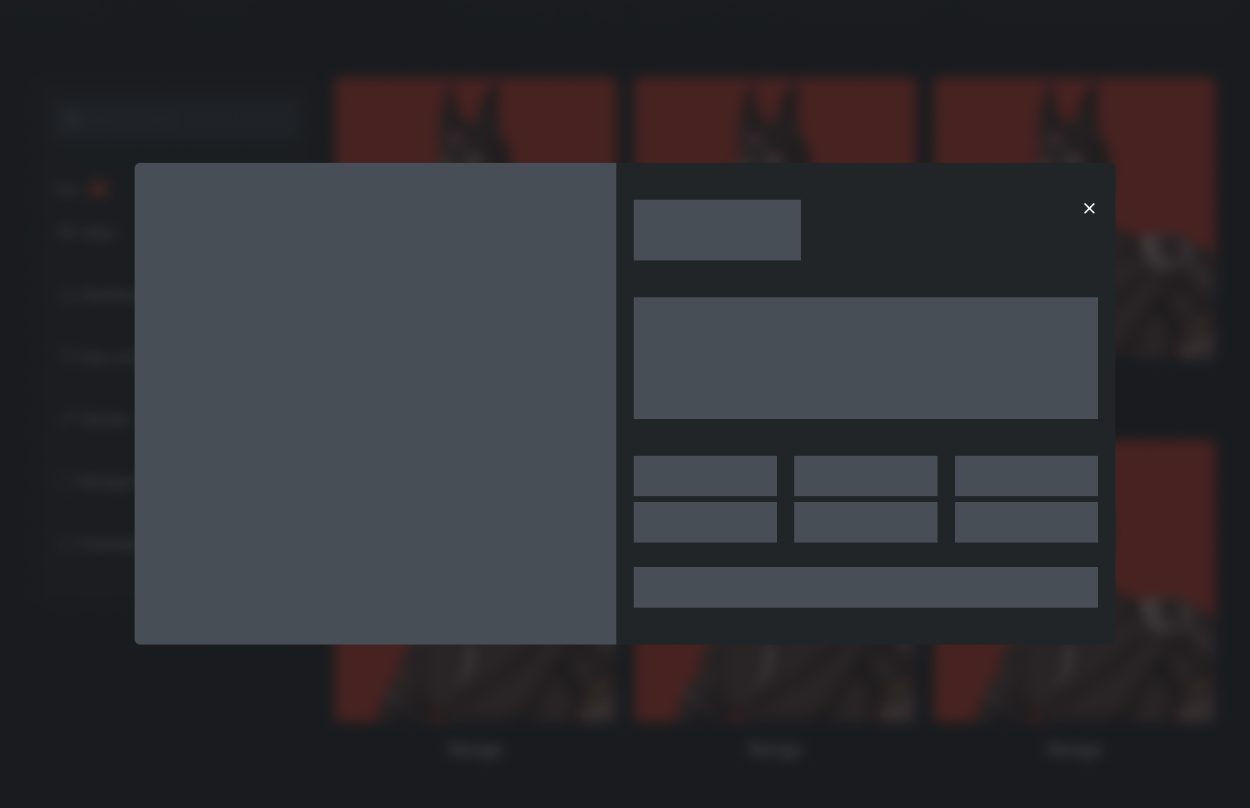
Visual system
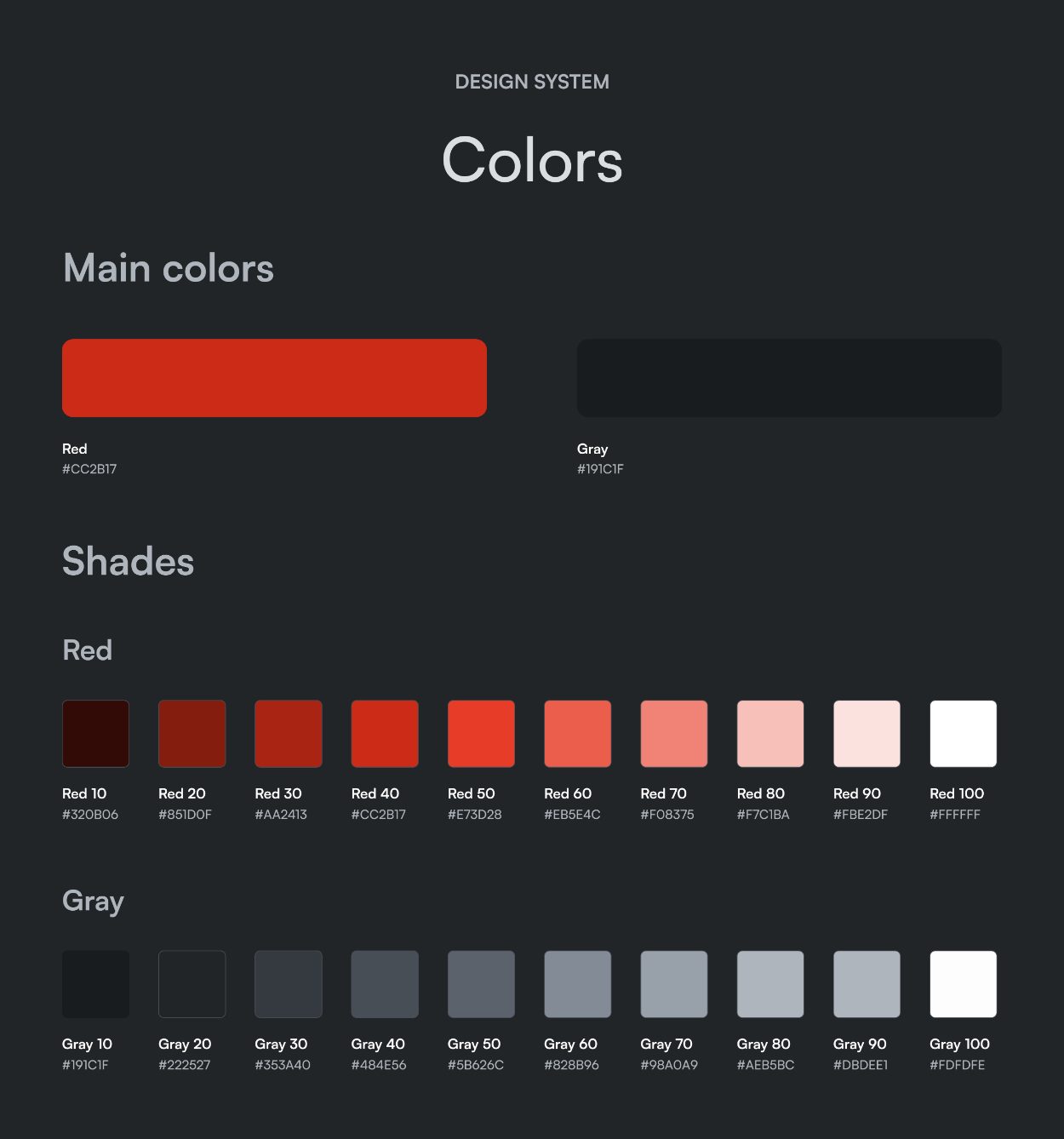
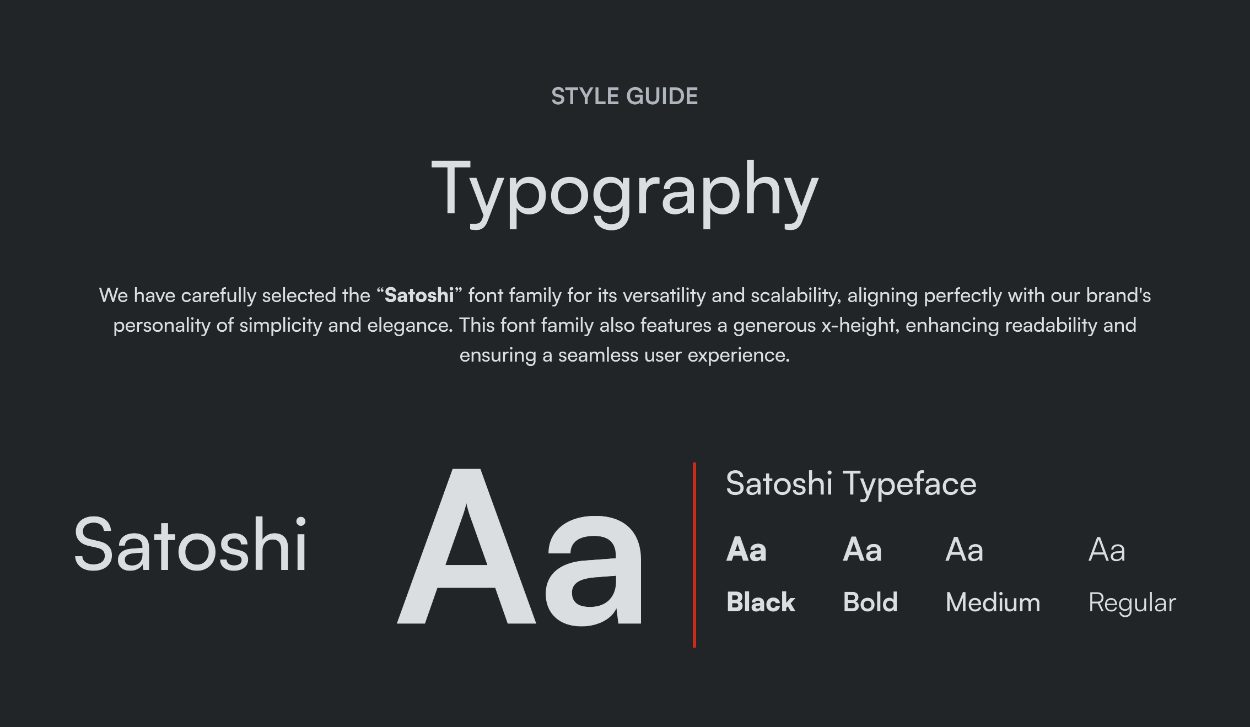
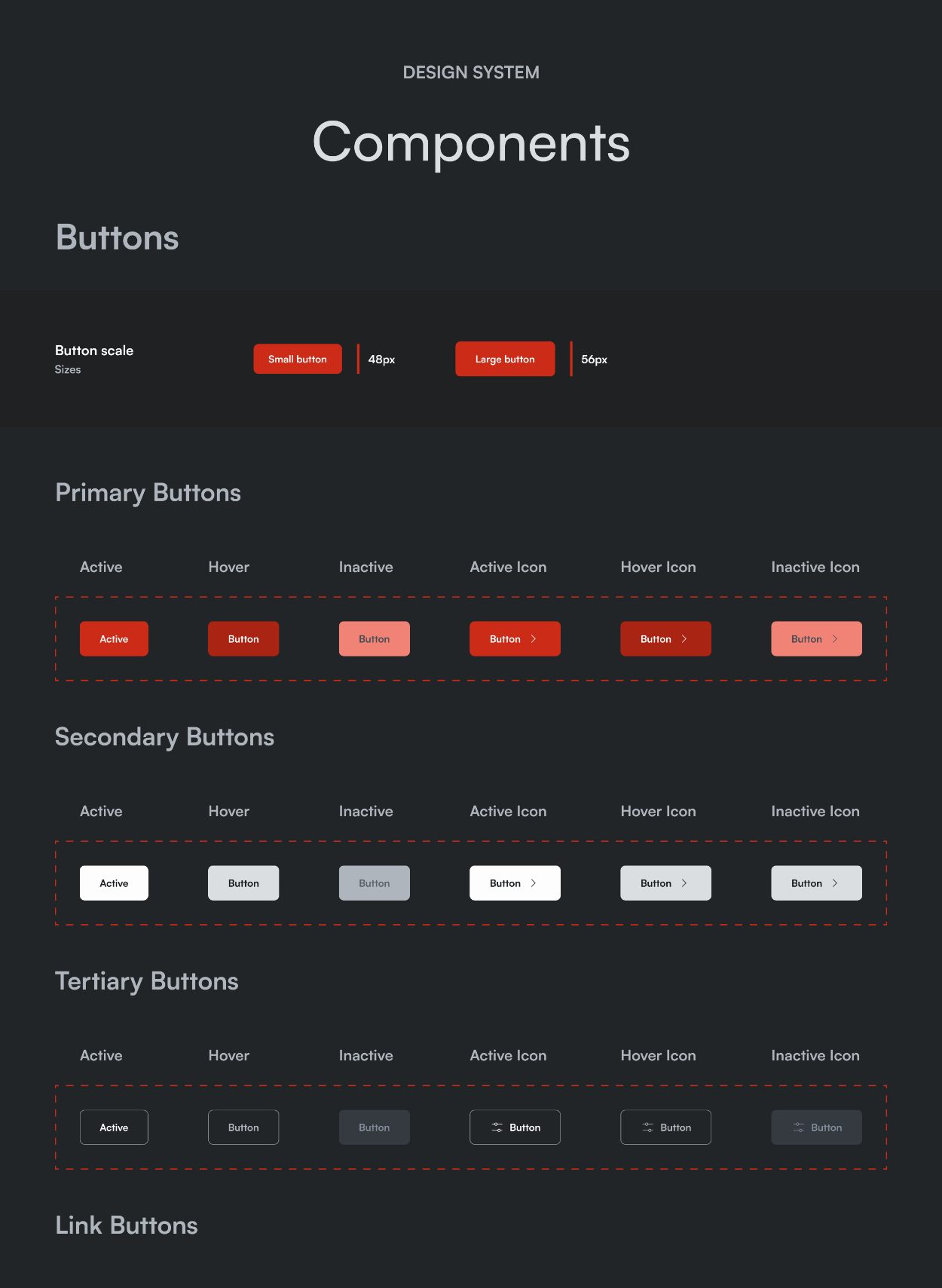
Two main colours, a deep red and a near-black grey, each with a ten-step scale. For type, Satoshi, chosen for its range and its generous x-height, which keeps long stories easy to read. The components cover four kinds of button in every state, the team card and the god's pop-up card.